Designing a scalable content platform

Web design • Visual design

Welltory, 2026

Context

Welltory’s content had outgrown a traditional company blog. We needed one platform that could support a growing health knowledge base, original research, product updates, and brand content — without becoming harder to navigate or maintain as the library expanded.

I designed the system from the ground up: content architecture, navigation, reusable page templates, and visual language across desktop and mobile.

Designing a scalable content platform

Web design • Visual design

Welltory, 2026

Context

Welltory’s content had outgrown a traditional company blog. We needed one platform that could support a growing health knowledge base, original research, product updates, and brand content — without becoming harder to navigate or maintain as the library expanded.

I designed the system from the ground up: content architecture, navigation, reusable page templates, and visual language across desktop and mobile.

One platform, three kinds of content

I structured the platform around three distinct content streams, each serving a different purpose while sharing the same underlying design system.

Brand

Company news, product updates, partner stories

Knowledge

A health knowledge base, optimized for AI visibility

Research

Insights based on Welltory’s anonymized data

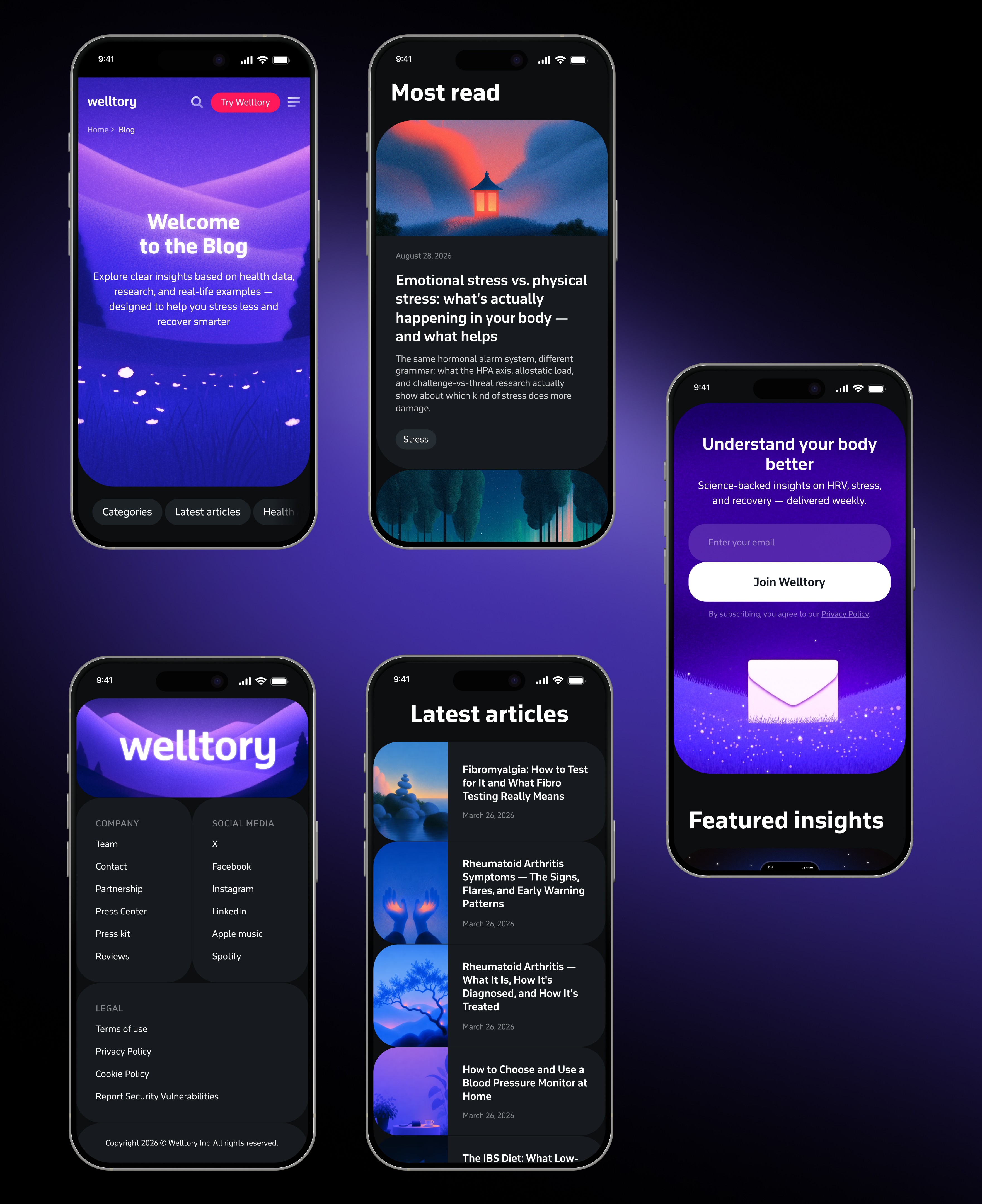
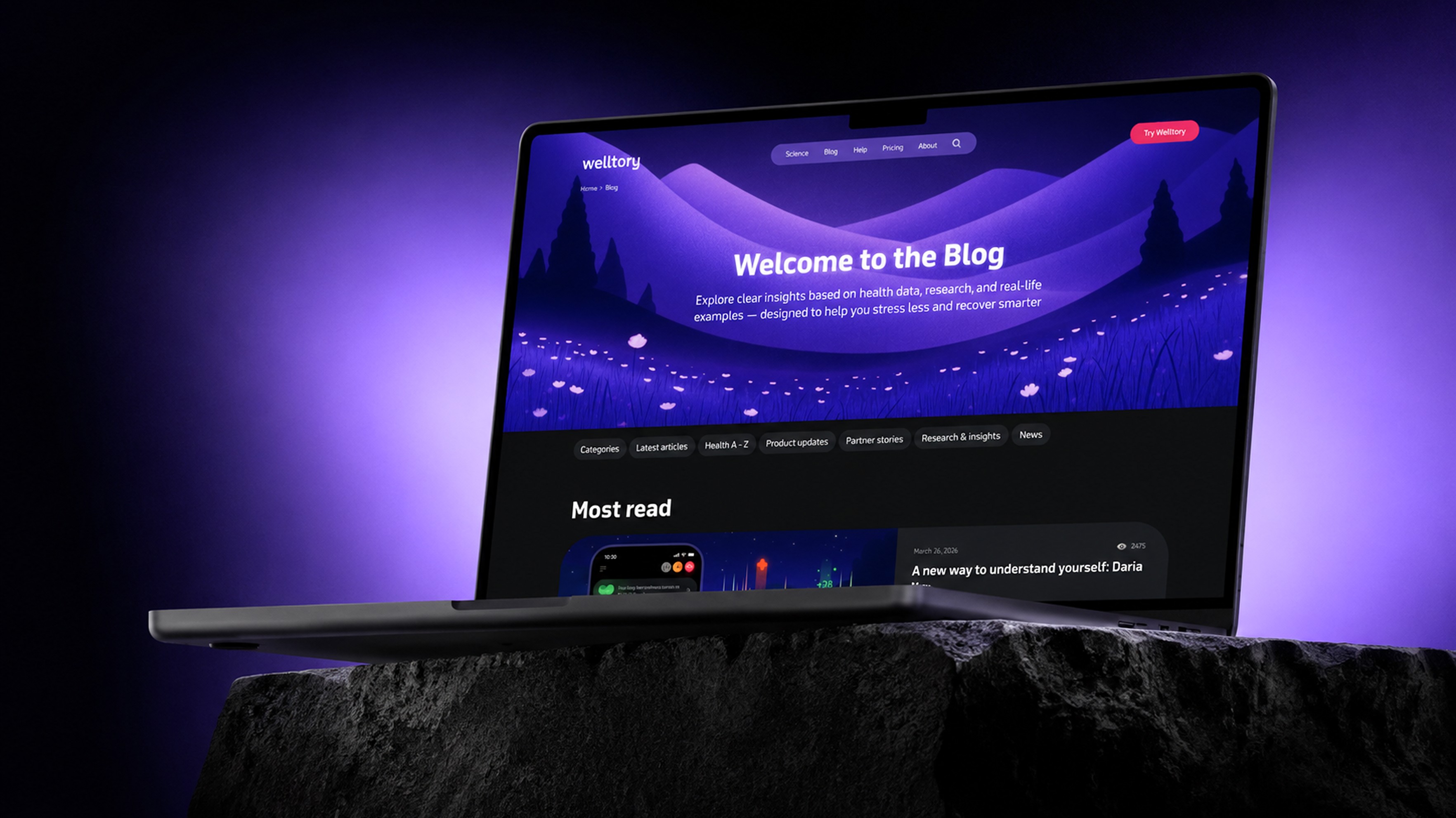
Main page

Main page

Main page on mobile

Main page on mobile

A navigation system for a growing content library

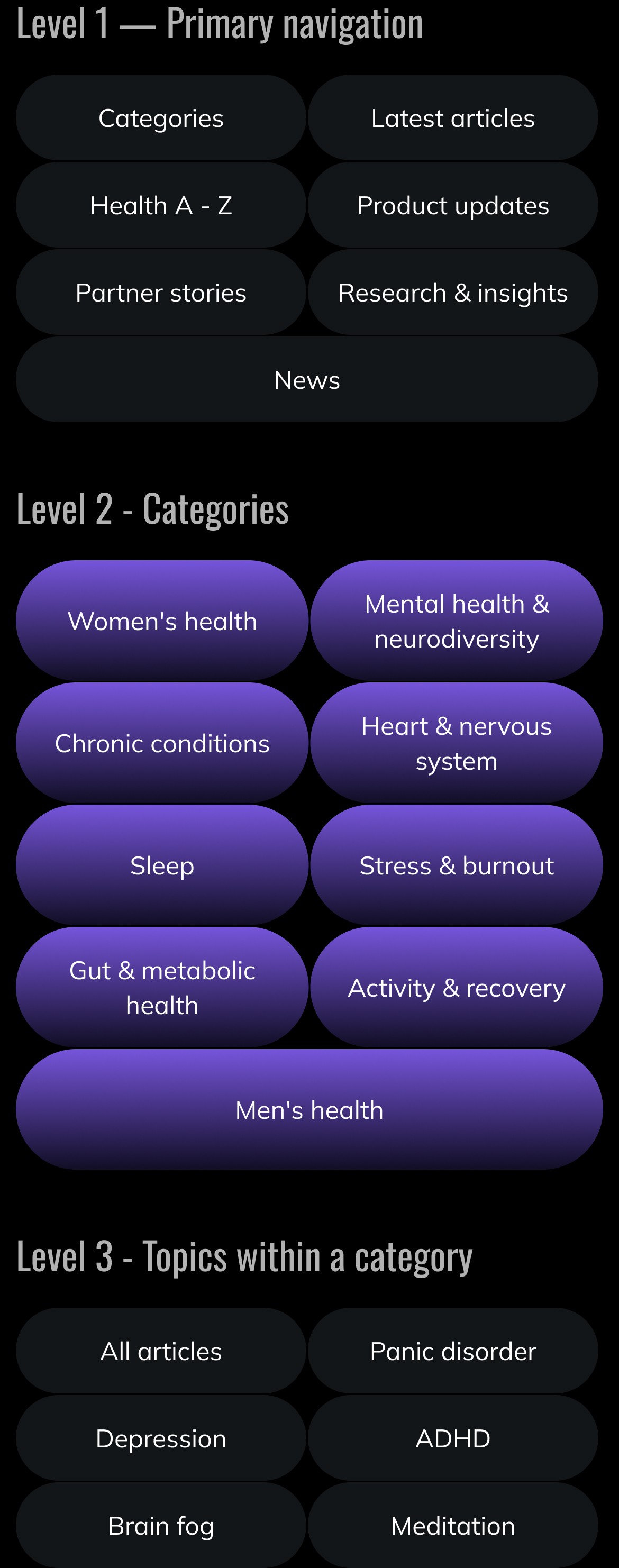
The taxonomy needed to work at two very different scales: help casual readers browse broad health areas, while letting users with specific questions drill down into individual topics.

I designed a three-level hierarchy — platform sections, health categories, and individual topics — that could expand as new content was added without changing the underlying navigation model.

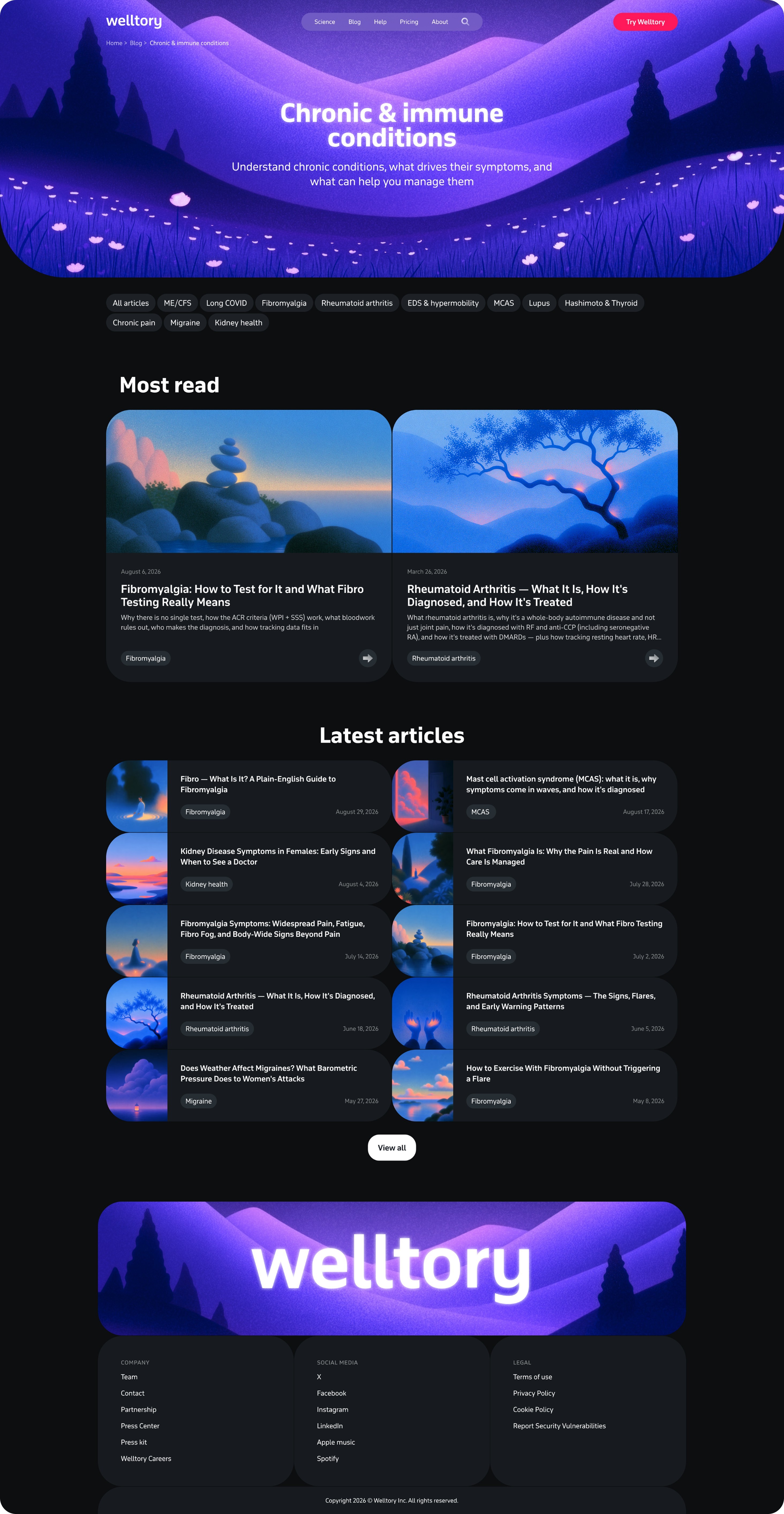
Category page template

Category page template

One reusable template supports every health category, from broad topic discovery to condition-specific content. The same system adapts to brand and product content without requiring a new page design.

One reusable template supports every health category, from broad topic discovery to condition-specific content. The same system adapts to brand and product content without requiring a new page design.

Topic page template

Topic page template

As the library grows, topic pages are generated from the same content and navigation system — keeping hundreds of potential topics structurally consistent.

As the library grows, topic pages are generated from the same content and navigation system — keeping hundreds of potential topics structurally consistent.

A flexible system for long-form health content

A flexible system for long-form health content

Health articles range from simple explainers to research-heavy pieces with charts, expert commentary, references, FAQs, and product integrations. I designed a modular article system that could accommodate all of them without requiring custom layouts.

Health articles range from simple explainers to research-heavy pieces with charts, expert commentary, references, FAQs, and product integrations. I designed a modular article system that could accommodate all of them without requiring custom layouts.

Article page on mobile

Article page on mobile

Author page

Author page

Reusable author pages connect content to the people and expertise behind it — bringing articles, credentials, media appearances, and authorship into one system.

Reusable author pages connect content to the people and expertise behind it — bringing articles, credentials, media appearances, and authorship into one system.

Built to grow without redesigning

Built to grow without redesigning

Instead of designing a collection of individual pages, I built a reusable content system: shared navigation, scalable taxonomy, modular article components, and templates for categories, topics, authors, research, brand, and product content.

Instead of designing a collection of individual pages, I built a reusable content system: shared navigation, scalable taxonomy, modular article components, and templates for categories, topics, authors, research, brand, and product content.

New content can now expand within the system rather than creating a new design problem every time the library grows.

New content can now expand within the system rather than creating a new design problem every time the library grows.